 PupShift
Who fed the dog? A family dog-care agreement
In short
Write one page together with a name next to every dog job, a rule to log each job the moment it is done, a check before feeding, and a review date. Everyone signs it.
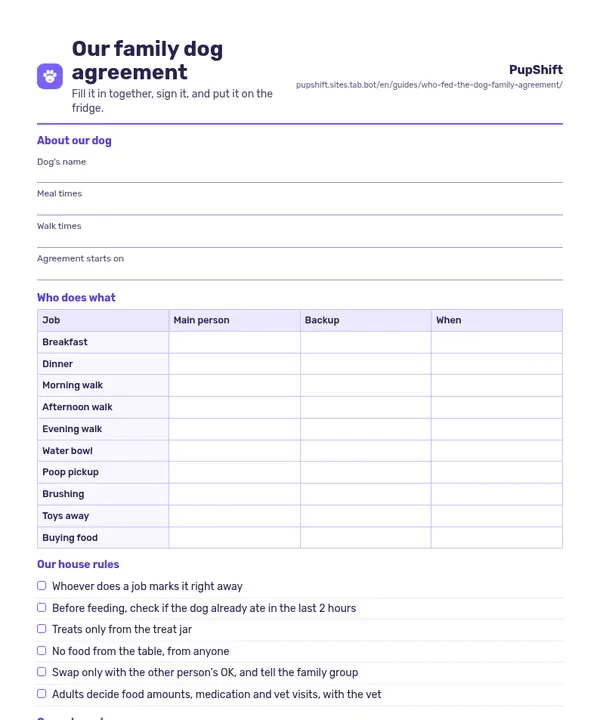 PDF · A4Our family dog agreementDownload PDF
If your house keeps asking "did anyone feed the dog?", write a one-page family agreement. Put one name next to every daily job, add a rule that you log a job as soon as it's done, and set a date to check how it's going. Everyone signs it and it goes on the fridge.
Why write it down
Nobody is trying to forget the dog. Dad thinks Noa fed Pepper before school, Noa thinks Dad did, and Pepper gets two breakfasts or none. And "I'll walk her every evening, I swear" tends to fade once the new-dog excitement does.
On paper, every job has a name instead of "someone", and everyone follows the same rules. That matters to the dog too. The American Kennel Club points out that dogs learn faster when everyone at home uses the same cues, and that if you don't want begging at the table, nobody can feed the dog from the table. When something slips, you look at the sheet together instead of looking for someone to blame.
Keep it short. The AKC's advice on house rules for a new puppy is to agree on them together as a family and stick to the essentials.
What goes in the agreement
- Who does what. Each daily job with one name: breakfast, dinner, morning walk, evening walk, water bowl, poop bags by the door.
- The log-it rule. Whoever does a job marks it right away, before the leash goes back on the hook. A tick on the fridge chart or a tap in a shared app. Not later, and not "I'll tell Mom".
- The two-hour check. Before feeding, check whether someone already did in the last two hours. If it isn't logged, ask in the family group chat before you pour.
- The treats rule. Treats come from one jar, filled with the day's allowance each morning. PDSA suggests keeping treats to no more than 10% of your dog's daily food allowance and cutting meals by the same amount. Your vet can tell you what that means for your dog.
- The table rule. No food from the table, from anyone. Grandparents included.
- Swaps. Arrange it with the other person and say so in the group. Otherwise it's a missed meal.
- Backups. Who covers when someone is sick, away, or stuck late at practice.
- Reward. What the family gets for a good week, like a movie night or picking Friday's dinner.
- Review date. Two weeks from today. If a rule isn't working, change it.
Sit down together
Pick a calm moment, not right after an argument about the dog. Twenty minutes at the kitchen table is enough. Start by listing every dog job, including the boring ones like picking up poop in the yard, refilling water and buying food before it runs out.
Split the daily jobs
Go job by job and put one name next to each, matched to what each person can really do. Ari (7) can handle the water bowl and putting toys away, Noa (11) can do the morning feed, and the adults keep the vet, medication and late-night walks. If two people want the same job, alternate weeks.
Write the house rules
Write the log-it rule, the two-hour check, the treats rule and the table rule in plain words, the way the kids talk. "Tick the chart before you do anything else" works better than "keep accurate records".
Agree on swaps and backups
Weekends at Grandma's, school trips and late meetings will happen. Decide now how a swap works (ask the person, then post it in the group) and who backs up each slot. Usually that's an adult.
Pick a reward and a review date
Choose a small family reward for a week with no missed meals or walks, something everyone actually wants. Write the review date on the agreement. At the review, ask what worked and which job keeps getting missed, then move that job, change its time, or pair someone up.
Sign it and put it up
Everyone signs, kids included. It feels a bit formal, which helps it feel like a real promise. Put it somewhere you all see every day, usually the fridge next to the dog food.
A sample agreement
Our dog agreement. Pepper is fed twice a day, at 7:30 and at 18:30. Breakfast: Noa on school days, Dad on weekends. Dinner: Mom. Morning walk: Dad. Evening walk: Noa and Mom together. Water bowl and toys: Ari. Whoever does a job marks it right away. Before feeding, check whether Pepper already ate in the last two hours. Treats only from the jar. No food from the table. Swaps are agreed with the other person and posted in the family group. Backup for any slot: Mom or Dad. Good week reward: Ari and Noa pick Friday's movie. Review date: two weeks from today. Signed: Mom, Dad, Noa, Ari.
The printable on this page has the same layout with blanks to fill in.
Common mistakes
- Writing "the kids" instead of a name. A shared job tends to get skipped.
- Too many rules. If it doesn't fit on one page, cut.
- No logging rule. Then you know who should feed the dog, but not who did.
- Using the dog as a threat. Deal with missed jobs at the review.
- Skipping the review. By week three, nobody reads an agreement that never changes.
Where PupShift fits
PupShift puts the log-it rule on everyone's phone. Whoever feeds or walks Pepper taps Fed or Walked, and the whole family sees who did it and when. If someone taps Fed again within two hours, the app checks first and shows who already logged the meal.
This is general information, not a substitute for advice from a vet or trainer. If something seems wrong with your dog, call your vet.
Sources
- The Importance of Consistency in Training Your Family Dog American Kennel Club
- How to Create House Rules for Your New Puppy American Kennel Club
- How to treat your dog PDSA
Checked on the update date.
This is general information, not advice from a vet, trainer or other professional.